 ENGR. AKIN
What Is the Difference Between an EPC and Turnkey Project?
If you have been involved in evaluating contract structures for a major capital project, you have almost certainly encountered both terms: EPC and turnkey. In many conversations, they are used interchangeably. In formal contract negotiations, however, the distinction between the two can have significant implications for risk allocation, payment structures, and what is actually delivered at project completion.
This article provides a clear, practical comparison of EPC and turnkey contracts, so that project owners, investors, and procurement teams can make informed decisions about the appropriate structure for their projects.
What Is a Turnkey Contract?
A turnkey contract is one in which the contractor delivers a fully operational facility that the client can immediately ‘turn the key’ and begin operating. The contractor is responsible for everything required to achieve that operational state, including design, procurement, construction, commissioning, performance testing, and staff training where applicable.

The defining characteristic of a turnkey contract is the state of delivery: the facility must be complete and functional, not merely physically constructed. The client’s role during execution is primarily one of oversight and approval, not active project management.
What Is an EPC Contract?
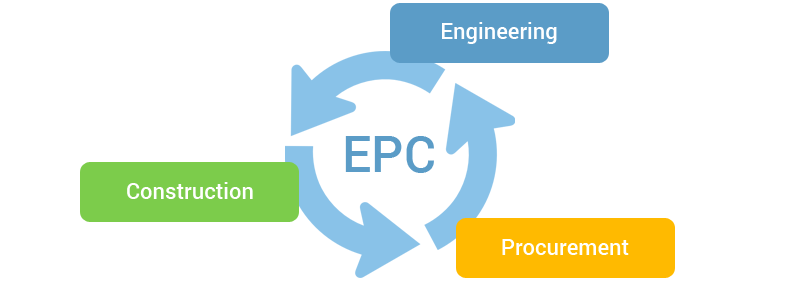
An EPC contract, as discussed elsewhere on this site, covers Engineering, Procurement, and Construction. In practice, most modern EPC contracts also include commissioning and start-up support, making them functionally equivalent to turnkey contracts in many respects.
The key distinction is that EPC contracts tend to be more specifically defined in terms of the scope boundaries and contractor responsibilities for each phase. Turnkey contracts may be broader in their implied obligations, particularly around operational readiness.
EPC vs Turnkey: A Side-by-Side Comparison
The table below highlights the primary differences between EPC and turnkey contract structures across the dimensions that matter most to project owners.
| Dimension | EPC Contract | Turnkey Contract |
| Delivery State | Mechanical completion with defined handover milestones | Fully operational facility ready for production |
| Contractor Scope | Engineering, Procurement, Construction (explicit) | All work required to achieve operational status (implied) |
| Client Involvement | Moderate; approval at defined milestones | Minimal; outcome-focused |
| Risk Allocation | Contractor bears delivery risk within defined scope | Contractor bears broader operational readiness risk |
| Payment Structure | Milestone-based on defined deliverables | Often tied to operational performance testing |
| Common Sectors | Oil & gas, power, industrial | Infrastructure, utilities, public projects |
Which Contract Structure Is Better for Oil and Gas Projects?
There is no universal answer. The right structure depends on the project’s stage of development, the client’s appetite for involvement, and the clarity of the technical scope.
When to Choose an EPC Contract
- The facility scope and technical requirements are well-defined through a FEED study
- The client wants transparent milestone-based accountability
- The project involves complex multi-discipline engineering that benefits from phased oversight
- Project financiers require defined drawdown triggers
When to Choose a Turnkey Structure
- The client wants minimum involvement and maximum delegation to the contractor
- The project is relatively standard in design (e.g. a modular facility)
- Speed of operational readiness is the primary driver
- The client lacks in-house technical capacity to oversee an EPC programme
What Is an EPCI Contract and How Is It Different?
EPCI stands for Engineering, Procurement, Construction, and Installation. This contract structure is specific to offshore and subsea projects, where installation by specialist marine vessels is a distinct and critical work phase. EPCI contractors must possess or subcontract marine installation capabilities in addition to the standard EPC scope. Construction EPCI specialises in this integrated delivery model for offshore energy projects.
EPC vs EPCM: What Is the Difference?
EPCM (Engineering, Procurement, and Construction Management) is fundamentally different from both EPC and turnkey. In an EPCM arrangement, the contractor manages the project on behalf of the client but does not hold the construction contracts directly. The client remains the contracting party with construction subcontractors, retaining more control but also more financial exposure.
Why Choose Our EPCI Services?
Construction EPCI has structured and delivered both EPC and turnkey projects for clients across the oil and gas, power, and infrastructure sectors in Nigeria and West Africa. We work with project owners and their legal and financial advisors to select and structure the contract model that best fits the project’s risk profile, financing requirements, and operational objectives.
Our experience on both sides of complex contract negotiations means we understand what robust contract structures look like and how to protect client interests throughout the project lifecycle.
Frequently Asked Questions
Is EPC always lump-sum?
No. EPC contracts can be structured as lump-sum (fixed price), reimbursable (cost-plus), or a combination of both. The lump-sum structure is most common for well-defined scopes where competitive bidding is feasible.
Can a turnkey contract include operations and maintenance?
Yes. Extended turnkey contracts may include an operations and maintenance period after handover, particularly on public-private partnership (PPP) infrastructure projects.
What happens if the contractor fails to achieve turnkey delivery?
Contracts typically specify liquidated damages for failure to achieve defined performance targets or completion dates, and may include provisions for the client to step in and complete the work at the contractor’s cost after a defined cure period.
The choice between EPC and turnkey is consequential. Understanding the distinction, and structuring your contract to reflect your specific project and risk priorities, is essential for successful project delivery.
| Talk to Construction EPCI about structuring your next project. Visit www.constructionepci.com |


 ENGR. AKIN