
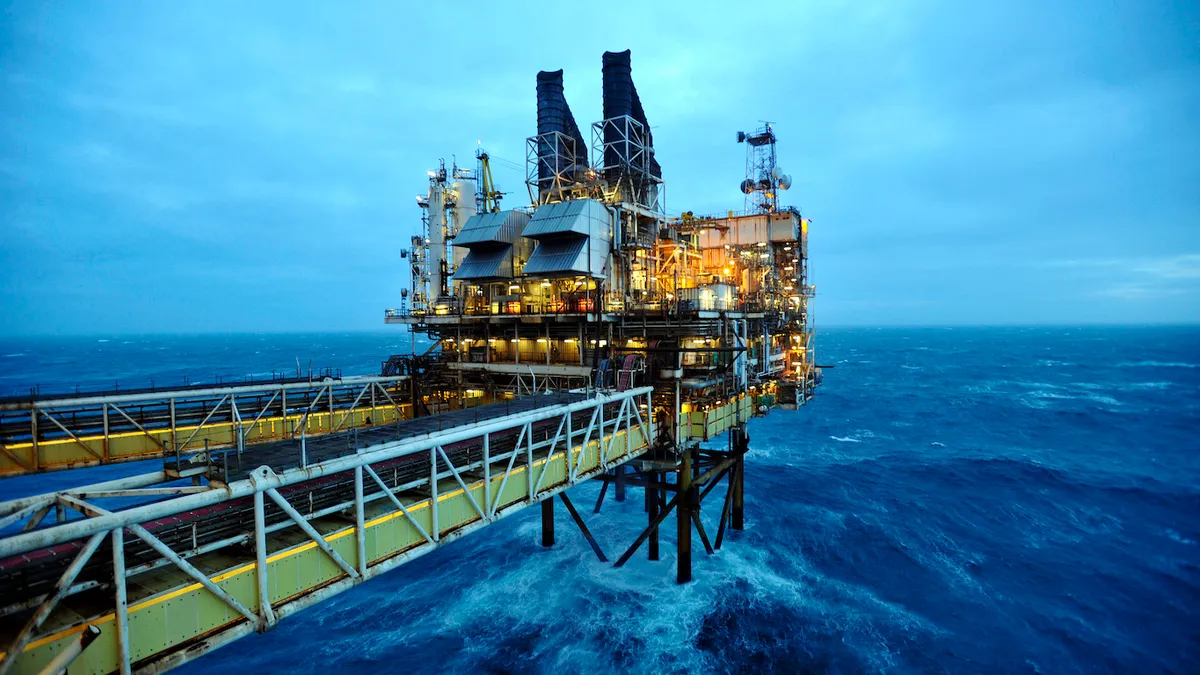
The offshore oil and gas industry is set for unprecedented growth and innovation as we move into 2025. With advancements in technology, increased investments, and a focus on sustainability, offshore projects are becoming more complex and efficient. Among these projects, Nigeria plays a significant role, particularly in its offshore oil and gas fields. Below are the top 10 offshore oil and gas projects to watch in 2025, with a particular focus on Nigeria’s contributions to the global energy landscape.
- Zohr Gas Field Expansion – Egypt
- North Sea Clair Ridge – United Kingdom
- Liza Phase 2 – Guyana
- Bonga Southwest – Nigeria
- Egina FPSO – Nigeria
- Ogoniland – Nigeria
- Mad Dog Phase 2 – Gulf of Mexico
- Woodside’s Scarborough Project – Australia
- Arctic LNG 2 – Russia
- Troll West Expansion – Norway
- Additional Nigeria Offshore Projects:
- Bonga North – Nigeria
1. The Zohr Gas Field Expansion – Egypt
Situated in the Mediterranean Sea, Egypt’s Zohr Gas Field stands as one of the most significant natural gas discoveries of the past decade, reshaping the country’s energy landscape. Discovered in 2015, the field holds an estimated 30 trillion cubic feet (tcf) of natural gas, making it a cornerstone of Egypt’s energy strategy.
This year marks a new phase of development for Zohr, with ambitious expansion projects aimed at boosting production capacity. The plan includes the installation of additional offshore platforms, the laying of extensive subsea pipelines, and the construction of advanced onshore processing facilities. These enhancements are designed to maximize the field’s output, enabling Egypt to meet the growing domestic and international demand for natural gas.
The expansion is not only critical for Egypt’s energy independence but also positions the country as a key player in the global energy market. Increased production will contribute to Egypt’s ability to export liquefied natural gas (LNG) to Europe and other regions, especially amid global shifts toward cleaner energy sources.
Moreover, the project is expected to generate significant economic benefits, creating jobs, attracting foreign investment, and fostering technological innovation in the oil and gas sector. As the Zohr Gas Field continues to expand, it underscores Egypt’s commitment to leveraging its natural resources for long-term growth and sustainability.
2. North Sea Clair Ridge – United Kingdom
BP’s Clair Ridge project, located in the North Sea, represents one of the largest and most ambitious offshore oil field developments in the United Kingdom. Clair Ridge: Revitalizing the North Sea
The Clair Ridge field is an extension of the original Clair field, discovered in the 1970s. BP has revamped the site with cutting-edge technology to maximize its potential. When fully operational, the project is expected to produce up to 120,000 barrels of oil per day by 2025, providing a major boost to the UK’s oil production.
Advanced Technology for Maximum Recovery
Clair Ridge focuses on revitalizing North Sea oil operations, an area historically known for mature and declining reserves. BP has invested heavily in advanced drilling techniques, such as extended reach drilling and state-of-the-art subsea production systems. These innovations allow the extraction of oil from challenging geological conditions, improving recovery rates and extending the field’s operational life.
Economic and Energy Impact
The project will also use new floating production storage and offloading (FPSO) units to extract and process oil efficiently in deep waters while reducing environmental risks. Clair Ridge will strengthen the UK’s energy security by decreasing dependence on foreign oil. Additionally, it is expected to create jobs, enhance infrastructure, and stimulate investment in local supply chains, offering both economic and strategic benefits.
Overall, the Clair Ridge project is a testament to the resilience and innovation of the North Sea oil industry, reinforcing the UK’s position as a significant player in global energy production.
3. Liza Phase 2 – Guyana
ExxonMobil’s Liza Phase 2 offshore project in Guyana is one of the most significant developments in the Caribbean oil industry. Located in the Stabroek Block, about 120 miles offshore, the Liza field ranks among the region’s largest oil discoveries. Phase 2 is set to expand on this success and drive Guyana’s oil production to new heights.
Advanced FPSO Technology for Deepwater Production
Liza Phase 2 will begin production soon, targeting an output of 220,000 barrels of oil per day. The project uses cutting-edge Floating Production, Storage, and Offloading (FPSO) technology. These massive units enable efficient extraction, processing, and storage of oil in deepwater environments. The FPSOs are equipped with advanced processing systems to maximize production while minimizing environmental impact.
Economic and Regional Impact
Beyond boosting oil output, Liza Phase 2 positions Guyana as an emerging energy hub in South America. Revenues from this project are expected to stimulate economic growth, enhance infrastructure, and strengthen the country’s financial stability. The development also opens doors for job creation, local industry growth, and long-term investment in Guyana’s energy sector.
Beyond economic benefits, ExxonMobil’s investment in the Liza project has led to the development of advanced offshore drilling and production technologies, increasing the efficiency and safety of offshore operations. The project also represents a model for future offshore oil ventures in the region, with Guyana now attracting global attention as an emerging energy player.
In summary, Liza Phase 2 is a game-changer for both ExxonMobil and Guyana, driving significant economic and technological advancements while solidifying the country’s position on the world energy stage.
4. Bonga Southwest – Nigeria
Overview of the Bonga Southwest Project
Shell’s Bonga Southwest project, located in the deep waters of the Gulf of Guinea, plays a crucial role in Nigeria’s oil industry. Nigeria has long been one of Africa’s largest oil producers, and the Bonga field, discovered in the late 1990s, has contributed significantly to offshore oil output. Now, the Southwest extension will further boost production. By 2025, Bonga Southwest is expected to add over 150,000 barrels of oil per day, helping Nigeria recover output lost from aging fields.
Advanced Technology for Efficient Extraction
The project incorporates cutting-edge Floating Production, Storage, and Offloading (FPSO) technology. In addition, new subsea systems optimize oil recovery. The FPSO unit, stationed offshore, features advanced processing and storage capabilities that allow efficient extraction and transport in deepwater environments. These systems increase recovery rates while keeping operations environmentally safe and economically viable.
Economic and Strategic Impact
Bonga Southwest supports Nigeria’s efforts to recover production from maturing fields and expand overall capacity. Moreover, the project will generate jobs, promote technology transfer, and contribute to local economic development through infrastructure and industry partnerships.
The development also aligns with Nigeria’s goal of maintaining its position as Africa’s top oil producer. Output declines from older fields have challenged the country in recent years, making new projects like Bonga Southwest essential for the stability of its oil industry.
Global Significance and Future Outlook
Shell’s Bonga Southwest project demonstrates how advanced technology and investment can extend the life of offshore fields. Furthermore, it ensures Nigeria’s oil sector remains competitive globally and continues to grow sustainably.
5. Egina FPSO – Nigeria
Total’s Egina project, located in the deepwater Niger Delta, plays a central role in Nigeria’s offshore oil production. Since starting operations in late 2018, Egina has steadily contributed to the country’s energy output. The project produces around 200,000 barrels of oil per day, making it one of Nigeria’s largest deepwater oil fields. Egina highlights TotalEnergies’ commitment to using cutting-edge technology for sustainable production.
Advanced FPSO and Subsea Technology
The project features a state-of-the-art Floating Production, Storage, and Offloading (FPSO) unit, among the largest ever deployed in Nigeria. This FPSO uses advanced processing systems and subsea technologies to efficiently extract, store, and export oil. Extensive subsea networks further optimize production while reducing environmental impact. These innovations allow Egina to operate safely and efficiently in a challenging deepwater environment.
Sustained Production and Strategic Upgrades
Looking toward 2025, Egina will continue to be a key contributor to Nigeria’s energy sector. TotalEnergies maintains high production levels through proactive FPSO maintenance and upgrades to subsea systems. These measures ensure sustained output, reinforcing Egina’s role in Nigeria’s oil exports and government revenue.
Economic and Workforce Impact
Egina also drives significant economic benefits. The project has created thousands of jobs and promoted local content development. It supports technology transfer and skills development, strengthening Nigeria’s workforce. By establishing the Niger Delta as a hub for deepwater exploration, Egina attracts further investment in the region.
Innovation and Global Significance
Egina’s success showcases Nigeria’s potential as a leader in deepwater oil production. With advanced infrastructure and modern technologies, the project demonstrates how innovation and strategic investment can drive energy sector growth. Egina secures Nigeria’s position as a key player in global energy markets for years to come.
6. Ogoniland – Nigeria
The development of oil reserves in Ogoniland represents a pivotal chapter in Nigeria’s energy story, even though the reserves are not new. Located in the Niger Delta, Ogoniland holds untapped reserves that could significantly boost Nigeria’s overall oil production. Historically, the region remained underdeveloped due to environmental damage and social challenges caused by past oil activities. However, local and international stakeholders are now working to revive Ogoniland’s potential through sustainable and community-inclusive practices.
Sustainable Extraction and Environmental Restoration
Growing investments are addressing both production and environmental restoration. Major oil companies, in partnership with the Nigerian government and local organizations, are implementing environmentally responsible extraction techniques. For example, they use advanced technologies to minimize spills and emissions. Rigorous cleanup initiatives are also underway to restore areas previously affected by oil-related pollution.
Economic Benefits and Community Impact
The revitalization of Ogoniland is expected to deliver substantial economic benefits. In addition to increasing national oil output, the project will generate jobs, enhance local infrastructure, and drive development in one of the Niger Delta’s historically neglected regions.
Equally important, the project fosters trust between oil companies, the government, and local communities. By prioritizing sustainability and community engagement, Ogoniland’s development could set a new standard for oil production in Nigeria, balancing economic growth with environmental and social responsibility.
Long-Term Energy Strategy
As Nigeria aims to maintain its position as Africa’s largest oil producer, the success of Ogoniland is crucial to the country’s long-term energy strategy. Beyond boosting output, the project signals a shift toward more inclusive and sustainable resource management. It ensures that the benefits of oil production are shared fairly while protecting the region’s fragile ecosystem.
7. Mad Dog Phase 2 – Gulf of Mexico
Project Overview
BP’s Mad Dog Phase 2 project in the Gulf of Mexico is a landmark deepwater exploration initiative. Building on the original Mad Dog field, which started production in 2005, Phase 2 targets untapped reservoirs. The project aims to boost output significantly. By 2025, it is expected to produce an additional 140,000 barrels of oil per day. This increase will reinforce Mad Dog Phase 2 as a flagship operation in BP’s deepwater portfolio.
Cutting-Edge Technology
At the heart of the project is the Argos Floating Production Unit (FPU), designed for deepwater conditions. Moreover, the Argos FPU incorporates advanced subsea technologies, including state-of-the-art drilling systems and enhanced recovery techniques. With a production capacity of up to 140,000 barrels per day, the unit allows BP to extract resources from complex reservoirs efficiently.
Strategic Significance
Mad Dog Phase 2 strengthens BP’s presence in the Gulf of Mexico, one of the world’s most prolific deepwater oil regions. Furthermore, the project showcases BP’s ability to leverage innovation and expertise to overcome technical challenges in ultra-deepwater drilling.
Economic and Environmental Impact
The project generates economic growth in the region. Thousands of jobs were created during construction, and operational activities will continue to provide opportunities for local communities. In addition, BP implements measures to minimize environmental impact, reflecting its commitment to responsible operations.
A Transformative Initiative
Mad Dog Phase 2 is transformative for BP and the Gulf of Mexico. With advanced technology and significant production capacity, the project sets a new benchmark for deepwater oil exploration. Ultimately, it reinforces BP’s leadership in the sector while contributing to the energy security of the United States and global markets.
8. Woodside’s Scarborough Project – Australia
Woodside’s Scarborough project, located offshore Western Australia, is set to become one of the Asia-Pacific region’s most significant energy developments. With an estimated 7 trillion cubic feet of natural gas reserves, the project will boost Australia’s energy capacity and reinforce the country’s position as a leading global LNG exporter.
Advanced Infrastructure and Technology
The project extracts gas from the Scarborough field, located about 375 kilometers west of the Burrup Peninsula. Moreover, it features advanced subsea tieback systems that connect the field directly to the onshore Pluto LNG facility via a 430-kilometer pipeline. This setup enables efficient transport and processing while reducing the environmental footprint typically associated with offshore operations.
Production and Market Impact
Scarborough is a cornerstone of Woodside’s growth strategy, with first production expected by 2025. Once operational, the project is projected to produce around 8 million metric tonnes of LNG per year. As a result, it will significantly contribute to the global LNG market and help meet rising demand for cleaner energy, particularly in Asia.
Sustainability Commitments
Woodside emphasizes sustainability throughout the project. The company will incorporate low-emission technologies, energy-efficient systems, and carbon offset initiatives to reduce overall greenhouse gas emissions. By prioritizing sustainability, Scarborough sets a benchmark for responsible energy development.
Economic and Community Benefits
The project will deliver substantial economic benefits to Australia. It will generate jobs, support local businesses, and drive regional development. Additionally, both construction and operational phases will create opportunities for skilled workers and foster innovation in the country’s energy sector.
Woodside’s Scarborough project is more than a major addition to Australia’s LNG capacity. By combining advanced technology with a commitment to sustainability, it will shape Australia’s energy future and maintain the country’s status as a global LNG leader.
9. Arctic LNG 2 – Russia
Russia’s Arctic LNG 2 project is poised to transform the global liquefied natural gas (LNG) market by 2025. Situated on the Gydan Peninsula in the Russian Arctic, this ambitious initiative is led by Novatek and supported by international partners. With access to some of the world’s most abundant gas reserves, the project is set to meet growing global energy demand while solidifying Russia’s role as a major LNG exporter. As energy consumption rises across Europe and Asia, Arctic LNG 2 positions Russia at the forefront of supplying cleaner, efficient fuel to international markets.
Cutting-Edge Technology and Production Capacity
The project will feature three liquefaction trains with a combined annual capacity of 19.8 million metric tonnes of LNG. Arctic LNG 2 is pioneering the use of gravity-based structure (GBS) technology for its liquefaction platforms, marking a first for Russia. These massive offshore structures are engineered to withstand extreme Arctic conditions, ensuring safe, reliable, and efficient LNG production. By employing such advanced technology, the project not only enhances operational efficiency but also sets new standards for Arctic energy development worldwide.
Strategic Location and Market Advantage
Located along the Northern Sea Route, Arctic LNG 2 enjoys a significant logistical advantage. This shorter shipping route allows for faster LNG delivery to key markets in Europe and Asia, cutting transportation costs and reducing carbon emissions. By optimizing delivery timelines, the project strengthens Russia’s competitiveness in the global LNG market while supporting environmentally conscious shipping practices. The strategic location also facilitates stronger trade relationships with energy-importing nations, further enhancing Russia’s influence in international energy supply chains.
Economic Impact and International Collaboration
Beyond energy production, Arctic LNG 2 is expected to drive substantial economic growth in the region. The project will create thousands of jobs, stimulate local infrastructure development, and provide opportunities for businesses supporting the Arctic energy sector. International collaboration is another key feature, with investors and stakeholders from China, Japan, India, and Europe contributing to financing, technology, and operational expertise. This global cooperation underscores the strategic importance of Arctic LNG 2 in connecting Russia with major energy markets and fostering long-term economic partnerships.
Overcoming Challenges in the Arctic
Developing LNG in the Arctic comes with significant challenges, including extreme weather, remote logistics, and geopolitical tensions. However, the project’s robust engineering solutions, strategic partnerships, and advanced technology position it to overcome these hurdles. By maintaining a focus on efficiency and sustainability, Arctic LNG 2 ensures that Russia can consistently deliver LNG to meet rising global demand, supporting the transition to cleaner energy while diversifying the nation’s export portfolio.
A Landmark for Global Energy
Arctic LNG 2 is more than just a milestone for Russia, it is a transformative project for the global energy landscape. With its advanced technology, strategic Northern Sea Route location, and substantial production capacity, the project addresses growing global energy needs and reinforces Russia’s leadership in the LNG sector. As countries increasingly turn to cleaner energy solutions, Arctic LNG 2 will play a critical role in ensuring a stable, efficient, and sustainable supply of natural gas to the world.
10. Troll West Expansion – Norway
Norway’s Troll West Expansion project is a critical initiative aimed at bolstering natural gas production from the Troll field, one of the largest gas reserves in the North Sea. This expansion underscores Norway’s commitment to maintaining its position as a leading supplier of natural gas to Europe, especially at a time when energy security is a top priority for the region.
The Troll West Expansion focuses on optimizing gas recovery through advanced subsea processing technologies. These technologies are designed to enhance production efficiency and maximize resource extraction while minimizing environmental impact. By extending the operational life of the Troll field, the project ensures a steady and reliable supply of natural gas, which is vital for meeting Europe’s growing energy demand.
Once operational, the Troll West Expansion will significantly boost Norway’s gas export capacity, providing a critical energy lifeline for European markets. The project aligns with Norway’s long-term energy strategy, which emphasizes the responsible and sustainable development of its natural resources.
In addition to its energy contributions, the Troll West Expansion brings economic benefits, including job creation and technological innovation. The project supports Norway’s offshore industry by driving advancements in subsea technology, which can be applied to other fields in the future.
With its focus on sustainability and efficiency, the Troll West Expansion exemplifies Norway’s leadership in the energy sector. The project not only reinforces the country’s role as a dependable energy partner for Europe but also highlights its ability to balance economic growth with environmental stewardship.
In summary, the Troll West Expansion is a cornerstone project for Norway, ensuring the continued supply of natural gas to Europe while advancing the use of cutting-edge technologies to meet global energy needs in a sustainable manner.
Nigeria’s Offshore Oil and Gas Projects to Watch
1. Bonga Southwest – Nigeria
Shell’s Bonga Southwest project, situated in the deep waters of the Gulf of Guinea, is poised to be a vital contributor to Nigeria’s oil production, with an expected output of over 150,000 barrels per day by 2025. This expansion is critical for maintaining Nigeria’s offshore oil output as the country seeks to boost production and regain its leading position in Africa’s energy sector.
The project leverages advanced Floating Production, Storage, and Offloading (FPSO) technologies, which allow for efficient oil recovery from deepwater fields. These state-of-the-art FPSO systems not only optimize extraction but also ensure flexibility in processing and storage, making them well-suited for the challenging offshore environment.
Bonga Southwest is also integral to Nigeria’s strategy of offsetting declines from aging oil fields while securing its role as a major global oil producer. Beyond production, the project is expected to deliver significant economic benefits, including job creation, technological transfer, and contributions to the local economy through infrastructure development and partnerships.
In summary, Shell’s Bonga Southwest project is a cornerstone for Nigeria’s energy future, combining cutting-edge technology with strategic investments to sustain and grow the country’s oil production capacity.
2. Egina FPSO – Nigeria
TotalEnergies’ Egina project is among Nigeria’s most significant and ambitious offshore oil developments. Located in the deepwater Niger Delta, Egina has a production capacity of approximately 200,000 barrels per day, making it a key driver of Nigeria’s offshore oil production. Since commencing operations in late 2018, the project has solidified its role as a cornerstone of TotalEnergies’ operations in the region.
The Egina project utilizes a state-of-the-art Floating Production, Storage, and Offloading (FPSO) unit, one of the largest of its kind deployed in Nigeria. This FPSO is equipped with cutting-edge subsea technologies that optimize oil extraction, processing, and storage, ensuring maximum efficiency and minimal environmental impact.
As Nigeria continues to focus on maintaining and increasing its oil production, Egina remains central to the country’s energy strategy. By 2025, it is expected to sustain its contribution to Nigeria’s oil exports, reinforcing the nation’s position as a leading oil producer in Africa. The project also emphasizes technological innovation, local capacity building, and sustainable practices, ensuring long-term benefits for the Nigerian economy and its workforce.
Egina not only exemplifies advanced engineering and operational excellence but also highlights TotalEnergies’ commitment to responsible energy development in Nigeria. The project plays a critical role in driving economic growth, supporting local industries, and ensuring the continued relevance of Nigeria in the global energy market.
3. Ogoniland – Nigeria
The Ogoniland oil field, located in the Niger Delta, has historically been an underdeveloped asset in Nigeria’s energy portfolio, largely due to environmental degradation and social challenges stemming from past oil activities. However, renewed investments and a strong emphasis on sustainability are now transforming Ogoniland into a promising area for offshore oil production. By 2025, Ogoniland is expected to boost Nigeria’s oil output and unlock its long-dormant potential.
Local and international stakeholders are paying close attention to Ogoniland. They focus on sustainable, community-inclusive approaches. Investors are implementing environmentally responsible extraction technologies and rigorous cleanup initiatives to address historical pollution. These measures aim to rebuild trust with local communities and ensure that oil production remains socially responsible and eco-friendly.
The development of Ogoniland should bring significant economic benefits. It will create jobs, improve infrastructure, and increase revenue for both local and national economies. Rising global energy demand gives Nigeria a chance to strengthen its position as a leading oil producer in Africa.
Ogoniland’s revitalization could also provide a blueprint for other oil-producing regions. The project demonstrates how resource extraction can balance environmental protection and social priorities. It represents a shift toward a more sustainable and equitable energy model, where local communities benefit and environmental impacts are minimized.
In summary, Ogoniland plays a crucial role in Nigeria’s energy strategy. Its growth potential and rising global attention make it a key contributor to offshore oil production, economic development, and energy security, while setting higher standards for sustainability in the sector.
4. Bonga North – Nigeria
Bonga North, an extension of Shell’s Bonga field located in the deep waters of the Gulf of Guinea, is a key project aimed at enhancing Nigeria’s offshore oil production. Scheduled to become operational by 2025, Bonga North is expected to contribute significantly to the country’s oil output while reinforcing Shell’s commitment to optimizing Nigeria’s offshore resources.
This project focuses on leveraging advanced subsea systems and state-of-the-art processing technologies to maximize production from existing fields. By improving recovery rates and operational efficiency, Bonga North will help sustain long-term production while reducing the environmental footprint of offshore operations.
Bonga North represents a significant investment in Nigeria’s energy sector, bringing both economic and technological benefits. The project will create job opportunities, support local businesses, and drive innovation within the oil and gas industry. Furthermore, it highlights the importance of extending the life of mature fields, ensuring that Nigeria continues to benefit from its offshore reserves for years to come.
As part of Nigeria’s broader energy strategy, Bonga North will play a critical role in maintaining the country’s position as a leading oil producer in Africa. The project underscores Shell’s expertise in deepwater operations and its dedication to supporting Nigeria’s economic development through responsible and sustainable energy projects.
In summary, Bonga North is a vital extension of Shell’s offshore portfolio, offering enhanced production capabilities, technological innovation, and long-term sustainability. This project is not only a testament to Nigeria’s vast energy potential but also a strategic effort to optimize and sustain its oil production for future generations.
Conclusion
Nigeria’s offshore oil and gas projects are positioned to play a significant role in the global energy landscape. From Bonga Southwest to Egina FPSO, these developments not only represent substantial technological advancements but also the resilience and innovation needed to overcome the challenges of offshore exploration. The global energy sector’s future will undoubtedly be shaped by these projects, and Nigeria will continue to be a central player in this dynamic industry.
To stay informed and gain exclusive insights into Nigeria’s offshore projects and the global energy market, sign up for our newsletter today! Get the latest updates, expert analysis, and in-depth reports on the most exciting developments in the offshore oil and gas industry. Don’t miss out, subscribe now!