
Computer engineers shine in a few areas that might be difficult for either an electrical engineer or a computer scientist. These areas include embedded systems, computer architecture, and digital signal processing. But what kind of jobs would it prepare you for? Well, you could design consumer electronics such as smartphones, smartwatches, eBook readers, or maybe the next generation of Intel CPUs. Many new medical devices and scanners rely on electronics designed by computer engineers. The Department of Defense and various contractors need computer engineers to create unmanned aerial vehicle flight controls and crucial satellite communication systems. In aerospace, you might work on an autopilot for the next Boeing plane or create the control system for the next Mars rover. Finally in the world of automation, computer engineers are writing low-level software for Amazon’s warehouse robots that help pick and deliver goods for packaging.
Computer Engineering Classes and Core Skills
So what kind of classes will you take to become a computer engineer? First, you’ll need a healthy dose of math. Particularly you’ll need calculus, differential equations, and some probability theory. From the computer science side, you will likely learn a couple of programming languages. These programming languages allow you to write code to tell computers what to do. You might start with a low-level programming language like C to teach you the underlying concepts of how an operating system works. Practice what you learn with a project, such as writing a device driver for your computer to say “respond to mouse clicks” or “read from a USB drive.” You will also learn a high-level programming language such as Java or Python. These are application-level programming languages that teach you higher-level computer science concepts such as object-oriented programming and algorithm design. Projects might include writing a smartphone app, creating a simple game like Flappy Bird, or searching through a database for customer information.
Computer Engineering Algorithms and Software Development
You will be introduced to a variety of algorithms, which is just a way of saying “steps required to solve a problem.” Google, for example, uses a very complicated algorithm to crawl through the internet and sort your search results starting with the most relevant. You will learn how to develop algorithms like this and analyze them for execution time and efficiency.
Electrical Engineering Foundations in Computer Hardware
From the electrical engineering side, you will usually start with basic circuit design, which includes creating and analyzing simple circuits with passive components like resistors, inductors, and capacitors. Labs might include designing circuits on paper, building them on a breadboard, and then testing their operation with an oscilloscope. Later classes will introduce semiconductor components like diodes and transistors. These lay the foundation for courses in digital circuit design including logic gate operation, Boolean algebra, and binary. These classes will lead into computer architecture, where you will learn how a computer works. Often you will be required to design your own computer processing unit or CPU by the end of the class.
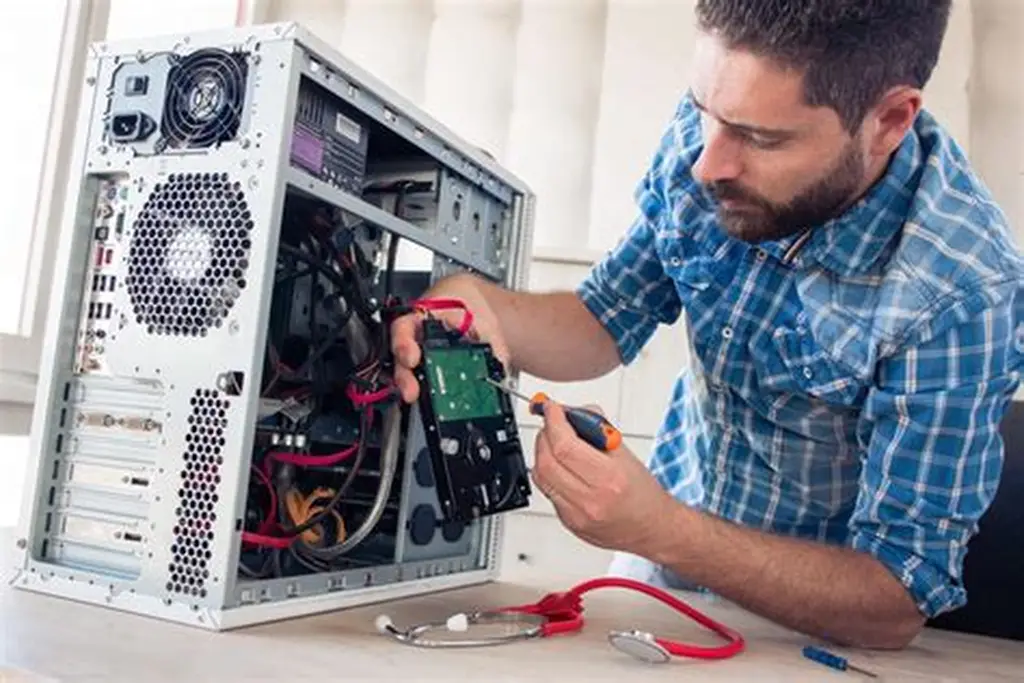
Embedded Systems and Computer Architecture in Practice
With these foundations, you can then move into the more specialized areas of computer engineering, and this is where the real engineering fun begins. You will likely take a class in embedded systems, which are essentially tiny chip-sized computers with processors known as microcontrollers. Knowing the basics of electronics and low-level programming allows you to work with microcontrollers, which can be found in smartwatches, drones, and modern thermostats. If you have heard of Arduino, it is a type of embedded system.
Computer Engineering in Signal Processing and Robotics
Finally, you will be required to take at least one class in signal processing, which is the analysis of how electrical signals change over time. Here you will be introduced to communication systems and filters. Trying to transmit data over long distances, say, images of Mars from the Curiosity rover, requires a lot of engineering and signal processing is just the beginning of these types of communication systems. Computer engineering also puts you in a good place to study robotics, as most robots rely on embedded systems for their brains. And these are just some of the things that computer engineering lets you do. It gives you a taste for electronics as well as programming. But it also allows you to specialize in some fields that develop exciting new technologies that affect our everyday lives.
Computer Engineering as the Fusion of Electrical Engineering and Computer Science
Computer Engineering is the combination of electrical engineering and computer science. If you have the electrical engineering curriculum and the computer science curriculum, which do not share many classes, the computer engineering curriculum is literally 50 percent of the EE classes and 50 percent of the CSC classes. This only accounts for your core major classes. It does not include the elective classes in your last years where you can choose from a long list of computer engineering, computer science, or electrical engineering classes to specialize in. Let’s dive into specifically what classes you take, which you already know if you’ve seen the computer science and electrical engineering breakdowns.
Electrical Engineering Core in Computer Engineering Curriculum
On the electrical engineering side, you will take all the basic circuit classes where you learn resistor, capacitor, and inductor circuits. You will solve for the voltage and current moving throughout them. These are simpler circuits but the techniques and components are a foundation for circuits that exist everywhere in phones, computers, satellites, and drones. You will learn about the basics of binary and how computers make decisions using ones and zeros. This includes learning things like logic gates, which take in ones and zeros and produce an output based on the input. Computers have hundreds of millions of these logic gates and when strung together can do advanced digital processing for devices such as a digital lock, a wristwatch, or an alarm system. You will also take signal processing courses where you look at complicated signals or changing voltages in time and analyze them in detail. This is important in filter design and removing unwanted signals, similar to how your car radio processes signals. When you tune to 94.5 FM, your electronics allow signals of 94.5 megahertz to pass while filtering out everything else. This involves high-level calculus and mathematical analysis, which is central to electrical engineering. Computer engineers also take multiple years of calculus and apply it in other electrical engineering classes.
Computer Hardware, Transistors, and Circuit Analysis
You will take electronics courses where you study transistors and diodes. A transistor has the ability to switch between a high and low voltage, such as five and zero volts, which computers read as ones and zeros. That is what we mean when we say a computer reads binary. There are billions of transistors in a laptop to make it work and store data. You will perform circuit analysis with transistors, applying the same principles you may have seen in high school physics such as conservation of current and voltage in a loop. In labs, you will hook up circuits on a breadboard for testing, then move them to a circuit board, which is what you see in computers and phones. To test them, you use an oscilloscope, which allows you to literally see the electrical signal changing in time, such as a transistor switching between high and low voltages that computers read as binary data. This is the hardware, electronics, and circuits that computer engineers must master.
Computer Programming, Algorithms, and Software Engineering
On the computer science side, you start learning programming in C and Java. These programming languages have syntax and rules that tell the computer what to do. They form the backbone of websites and applications. For example, Google uses programming languages to search databases efficiently, while Pandora uses them to predict songs you may like. Programming creates apps, video games, unmanned aircraft control, and satellite software. You will start small, such as writing a program that sums numbers, finds the largest in a list, or outputs a word backwards. Later, you may program a basic blackjack game. You will also learn algorithms, which are step-by-step instructions to solve problems. For example, if you want to check whether the number 26 exists in a sorted list, you could check each number one by one, which takes multiple steps, or use a binary search algorithm to cut the list in half repeatedly until you find the number. This approach is far more efficient. Algorithms like these are critical to computer programming, database search, and efficient computation.
Arduino, Embedded Systems, and Practical Computer Engineering
One of the most exciting classes introduces you to Arduino, where hardware and circuitry meet programming. The Arduino has many inputs for wires from external circuits. You program what you want it to do based on those inputs, download the code onto the Arduino, and then use it for various purposes. For example, you might connect a position sensor to a circuit, then program the Arduino to detect the voltage and control a robotic vehicle to avoid obstacles. This is collision avoidance, which combines embedded systems, microcontrollers, and applied computer programming. These hands-on projects are where computer engineering becomes both practical and powerful.
Computer Engineering Career Opportunities and Electives
Computer engineering gives you skills in programming and software as well as hardware and circuitry. If you wanted a job at Apple, you could work on their operating system, system memory, servers, encryption, and security, or you could work with their electronics and hardware. You could work at defense companies on unmanned aerial vehicles, obstacle avoidance, or aircraft radar simulation. After your core classes, you will also take electives in areas such as computer security, firewalls, and access control; computer vision and image processing; autonomous robot navigation; programming vehicles; web development; and interactive website design. These electives let you specialize in high-demand fields such as robotics, cybersecurity, and artificial intelligence while combining the strengths of electrical engineering and computer science.
Average Software Engineer Salary in 2025
$188,600 is the average salary of a software engineer in 2025. But what do software engineers actually do? My name is Sjad. I am a full-time software engineer and I majored in computer science at Georgia Tech. Before I got into this field, this was a big question I had. Software engineering and computer science seemed like a black box. I pictured someone sitting behind a screen just coding all day, but there is so much more to the profession. In this breakdown, I’ll cover the responsibilities of a software engineer, why I got into this field, and the perks I enjoy as a full-time software engineer.
Core Responsibilities of a Software Engineer
The first responsibility is writing code. As a software engineer or software engineering intern, you will be writing code for either the frontend, backend, or both.
Frontend engineering is everything a user interacts with on the screen. For example, if you are on YouTube, all the visuals you see including the like button were created by frontend engineers. Even the interaction when you click the like button is a frontend feature.
Backend engineering is everything behind the scenes. For example, when you hit the like button on a YouTube video, how does YouTube know to update the counter and show the increase consistently across millions of users? That is the work of backend engineers.
A full stack engineer works across both frontend and backend. Early in your career, it is valuable to gain exposure to both areas.
Testing, Code Quality, and Software Performance
The second responsibility of a software engineer is testing the code. Companies develop new features regularly, but testing ensures they work properly. Testing includes performance and scale testing, where engineers simulate millions or billions of impressions to ensure features work under real-world conditions.
Proper testing prevents crashes, buffering issues, and negative user experiences. It is such an important part of software engineering that neglecting testing can lead to termination. Writing code is only part of the job—ensuring reliability through testing is equally important.
Innovation, Maintenance, and Software Engineering Growth
The third responsibility is maintaining and innovating. Innovation is necessary for platforms to stay competitive. YouTube continues to evolve as it competes with TikTok, Instagram, and Twitter. That is why algorithms change to emphasize watch time, engagement, and viewer satisfaction.
Maintenance ensures platforms continue working with new technologies. For example, YouTube must integrate across devices such as smartphones, tablets, TVs, and new hardware in the future. Engineers adapt systems to remain functional as technology evolves. Software engineers are responsible for balancing innovation with long-term stability.
Software Architecture and System Design
The fourth responsibility is designing architecture. Before writing a single line of code, software engineers must diagram workflows and requirements in plain English. For example, if YouTube wanted to replace the like button with a heart button, the workflow would be mapped out: a user logs in, watches a video, clicks on the heart, and the system updates accordingly.
This ensures engineers, designers, and product managers are aligned before coding begins. Good system design and architecture are crucial to building scalable applications. This also illustrates why AI cannot simply replace software engineers, architecture, design, and human workflows require strategic thinking.
On-Call Support and System Reliability
Another responsibility is on-call support. Think of this as being a 24/7 technical responder. If YouTube videos crash at 3 a.m., engineers are paged to resolve the issue. Most engineers rotate on-call duty every few months depending on the team and company. This can be stressful but is vital for keeping global platforms running without interruption.
Global Impact of Software Engineering
Software engineering offers a unique global impact compared to other professions. A doctor or lawyer may help one person at a time. As a software engineer, code written in a home office can impact millions of users worldwide, from the United States to Australia to Canada. That is the power of technology and computer science careers.
Software Engineer Perks and Benefits
Beyond salary, software engineers enjoy strong benefits. Remote software engineers often receive free internet and phone bills, free gym memberships, flight reimbursements, retirement fund contributions, and flexible work hours. I personally enjoyed working remotely while traveling to New York, Austin, and Atlanta without taking time off. Flexibility during Ramadan made balancing work and life easier. Discounts for entertainment such as NBA games and Broadway shows are common. Many companies also provide seasonal breaks and wellness programs.
These perks, combined with high salaries, make software engineering one of the most rewarding technology careers. While the responsibilities can be challenging, the career offers strong growth, flexibility, and long-term opportunities.
The Role of Hardware Engineers in Media Technology
We plug in our guitars to a stomp box and guitar amp, or we plug in a microphone to a karaoke system. We listen to our music with high-quality headphones and speakers, and we enjoy room-to-room wireless audio and Bluetooth syncing among our devices. All this is enabled by hardware engineers.
Hardware engineers have a wide variety of roles such as designing analog circuits, power amplifiers, custom chips, industrial design, and overseeing the manufacturing of millions of units in media technology. Their work makes music more visceral, creative, tactile, and sounding amazing.
Hardware Engineering vs Software Engineering
The risks are higher with hardware engineers. With software, you can distribute changes, bug fixes, and improvements easily after the product ships. You can update your app, silently fix bugs on your website or online web service, or issue a patch for your plugin. Hardware engineers do not have this luxury. Once their work ships, it is final.
Becoming a Great Hardware Engineering Candidate
What makes for a great hardware engineering candidate? Two qualities stand out: experience and passion.
How do you gain more experience before entering a company? Work on projects. Build robots, create your own guitar amplifier, and participate in hardware hackathons. Pursue projects outside of your typical hardware and electrical engineering coursework. Go beyond what the professor asked you to build to demonstrate initiative and passion.
Bring a portfolio of projects to any job interview. Show your self-motivation and your love for media technology.
Collaboration and Innovation in Hardware Engineering
Another key piece of advice is to collaborate with others as much as you can. Work on interdisciplinary teams with hardware engineers, software engineers, designers, and artists. Hardware engineering, computer hardware design, mechanical engineering, and industrial design are rewarding disciplines.
In the end, you will create a tangible object that helps consumers and creative professionals further their enjoyment of images, music, and video.
Why Now is the Best Time to Become a Hardware Engineer
There might have never been a better time to become a hardware engineer. Nvidia is leading the way, the Mac is transitioning to Apple silicon, and autonomous vehicles are now testing on freeways in Phoenix. Technology is racing ahead, and computer hardware is at the center of everything from AI to virtual reality to electric vehicles.
On the other hand, major software companies have recently retracted after years of explosive growth. Software engineering has been the de facto ideal career for the last decade with its high salaries, good work-life balance, and interesting work. So how do these two jobs stack up? Which field is better, and which should you choose?
Comparing Hardware Engineering and Software Engineering Careers
My name is Abby Shake, and I am a hardware engineer living in San Francisco and working at Nvidia. In this discussion, I want to compare five metrics across hardware engineering and software engineering: what you do every day, how hard it is to get a job, how cushy the job is, how much you will make, and the long-term potential.
Software engineers write software, and the type of software you write can vary so much that different roles can feel like different jobs. You could be writing integration tests, developing iPhone applications, or analyzing debug logs. As you gain seniority, you are given more complex and autonomous projects. The work can be interesting or dry depending on the company, role, and manager.
Hardware engineers also write software. By hardware, I mean computer hardware engineers, since there are other types of hardware engineers not involved with code. Computer hardware engineers work on digital systems, computer chips, and hardware accelerators. As a computer architect, much of my job is done with code. RTL engineers, closer to the hardware, use hardware description languages such as Verilog, SystemVerilog, or VHDL. These are similar to high-level programming languages but with different syntax and rules to describe hardware. As you move down the software-hardware stack, the work shifts toward circuit design and PCB layout. Both fields are deeply interrelated, as software enables more complex hardware, and more complex hardware enables better software. This round is a tie.
Job Availability and Education in Hardware vs Software
So how hard is it to get a job? For software roles, a bachelor’s degree can land you a solid job at a big tech company, while a master’s degree can open the door to specialized roles or research positions. For hardware roles, a master’s degree is more common and often required, since undergraduate coursework does not always cover enough content for hardware engineering.
Computer hardware engineers also require knowledge of both hardware and software, since all the hardware they build must efficiently run software. Software engineers sometimes need hardware knowledge, but in many modern stacks, high-level programming languages like Python or Java shield them from the details of the underlying hardware.
Hardware Engineering vs Software Engineering: Salary, Career Growth, and Future Potential
Job Market, Security, and Work-Life Balance in Engineering
In terms of job availability, there are more software companies than hardware companies, which means more software jobs. Barriers to entry are lower in software, and it requires less expertise to launch a successful startup. Despite recent layoffs in software, there are still significantly more roles available compared to hardware. This round goes to software.
For job security, hardware engineering has a slight edge. The higher education requirement and lower supply of talent make hardware engineers harder to replace. Software engineers, on the other hand, sometimes feel more replaceable due to the large number entering the industry. Work-life balance is a tie, as it depends heavily on the company and culture.
Engineering Salaries and Benefits Compared
Software engineering on average pays better. This is supported by self-reported salaries, personal experience, and industry conversations. Software continues to see high demand due to rapid innovation, which keeps salaries elevated. Hardware salaries are slightly behind but are heating up due to AI, chip design, and semiconductor demand.
At the same level, the salary gap between a hardware engineer and a software engineer can range from $10K to $100K or more. Benefits vary by company, but software tends to offer higher salaries and more comprehensive perks. This round goes to software.
Long-Term Potential for Computer Engineers
Both fields offer strong long-term career prospects. You can grow into management, remain an individual contributor, or transition into different roles. A major advantage for hardware engineers is flexibility. It is easier to move from hardware to software than the other way around. Hardware engineers have strong foundations in computer engineering, computer architecture, and often electrical engineering, making it easier to pick up coding. Software engineers may lack these hardware fundamentals, and learning them independently is more difficult.
This round is a tie. Both hardware engineering and software engineering can lead to successful careers. However, if your goal is to manage or work on cross-functional teams involving hardware and software, hardware engineering may give you an advantage.
Final Verdict: Choosing Between Hardware and Software Careers
So, is hardware engineering better than software engineering, or does software remain king? The answer depends on personal preference. Ask yourself three questions.
First, which do you enjoy more? Do you like coding in high-level languages like Python, or do you prefer working with Arduino, computer hardware, and circuit analysis? Second, how important is money? If maximizing pay is the top priority, software offers more opportunities for high salaries and career mobility. Hardware engineering is only slightly behind but requires more specialization. Finally, what are your long-term goals? If you want to be involved in hardware development, embedded systems, or computer architecture, hardware engineering is better. If you see yourself in software-only roles, software may be the right choice.
Both career paths are excellent. Computer engineering, computer hardware, and programming skills will always be in demand. Whether you choose software engineering or hardware engineering, you are setting yourself up for a rewarding career in technology.
What Does a Network Engineer Do? Skills, Roles, and Career Path
A network engineer is a core part of modern IT infrastructure. They design, manage, and maintain the systems that keep businesses connected from internet access to secure office networks. Unlike entry-level support roles, network engineers work at a more advanced level, ensuring that routers, switches, firewalls, and wide-area networks (WANs) all run smoothly and securely.
The IT Support Model: Where Do Network Engineers Fit?
In technology support, there are typically three tiers:
- Level 1 (Help Desk / Service Desk): First-line support answering tickets, troubleshooting common issues.
- Level 2 (Desktop / Technical Support): On-site staff, fixing computers, handling escalations, supporting end-users directly.
- Level 3 (Infrastructure Engineers): Specialized experts who manage systems, databases, security, storage, and importantly networks.
Network engineers sit at Level 3, alongside systems administrators, database admins, and security engineers.
Responsibilities of a Network Engineer
A network engineer ensures that all networking equipment and services are:
- Designed and Configured Correctly: Setting up routers, switches, firewalls, and load balancers.
- Maintained and Secured: Applying patches, monitoring performance, ensuring redundancy and uptime.
- Optimized for Performance: Managing VLANs, subnets, routing protocols, VPN connections, and quality of service (QoS).
- Scalable and Reliable: Building infrastructure that supports multiple offices, remote workers, and cloud integrations.
For example:
- Firewalls must only allow approved traffic in and out.
- Switches must be configured for correct port speeds, VLAN segmentation, and high availability.
- Routers must handle site-to-site traffic efficiently, with protocols tuned for security and speed.
Collaboration Across IT
Network engineers don’t work in isolation. They collaborate with:
- Systems engineers/admins: to connect servers and storage into the network.
- IT managers: to report on performance, security, and infrastructure health.
- Security teams: to ensure firewalls, VPNs, and access controls meet compliance requirements.
Skills Needed to Become a Network Engineer
To build a successful career, network engineers typically need:
- Strong understanding of networking fundamentals (TCP/IP, subnets, routing, switching).
- Hands-on experience with Cisco, Juniper, or similar networking equipment.
- Knowledge of firewalls, VPNs, and security protocols.
- Familiarity with network monitoring tools and troubleshooting methodologies.
- (Optional but valuable) Skills in automation and scripting for modern, software-defined networking (SDN).
Career Path: From Admin to Engineer
In smaller companies, a network engineer may also manage systems, servers, and storage. In larger organizations, the role is more specialized, with engineers focusing exclusively on the networking layer.
Typical progression looks like this:
- Help Desk / Technical Support (L1–L2)
- Network Administrator (junior-level network management)
- Network Engineer (designing and maintaining infrastructure)
- Senior Engineer / Network Architect (strategic design, scaling, cloud integration)
Conclusion
When comparing hardware engineering, software engineering, and network engineering, the truth is that all three fields are essential to the technology industry, each playing a unique and complementary role.
Hardware engineers bring ideas to life by designing the physical systems such as chips, circuits, and devices that power our digital world.
Software engineers build the applications and platforms that run on top of that hardware, driving innovation in everything from mobile apps to artificial intelligence.
Network engineers ensure that all of this technology can communicate securely and reliably, keeping businesses, data centers, and global systems connected.
Choosing the right career path depends on your personal interests, strengths, and long-term goals.
If you enjoy building physical systems and understanding how computers work at the core, hardware engineering might be the best fit. Coding, creating applications, and solving problems at scale, software engineering offers unmatched opportunities.
If you are passionate about connectivity, infrastructure, and security, network engineering provides a rewarding and high-demand career.
No matter which path you choose, each offers strong growth, high earning potential, and lasting relevance in a world that continues to be driven by technology. The most important factor is to follow the path that excites you most, because passion combined with skill is what will set you apart and lead to long-term success.