 Ben Green
In busy industrial workplaces like warehouses, factories, logistics centres, and workshops, safety and comfort aren’t just boxes to tick — they directly affect how well people work and how smoothly operations run. When floors are slippery, hard underfoot, or constantly exposed to dirt and moisture, problems tend to follow. One simple but often overlooked way to tackle these challenges is by using the right industrial mats.
Industrial matting is designed to handle the realities of day-to-day work. It helps reduce the risk of slips, supports employees who spend long hours on their feet, and protects floors from constant wear. In the UK, especially, where wet entrances, changing temperatures, and heavy foot traffic are common, mats need to perform reliably in all conditions. When chosen carefully, they can make a noticeable difference to cleanliness, safety, and overall comfort.
In this guide, we’ll look at how industrial mats support safer and more comfortable workplaces, and share practical advice to help you choose the most suitable options for different industrial environments.
Why Industrial Mats Matter for UK Workplace Safety
Workplace safety is shaped by many small, practical decisions. In industrial environments where wet floors, machinery movement, and constant foot traffic are common, slips and trips remain a persistent risk. Industrial mats play a critical role in reducing these hazards and supporting safer day-to-day operations.
Preventing Slips, Trips & Falls (HSE Priority)
According to the UK Health and Safety Executive (HSE), slips and trips are among the leading causes of non-fatal workplace injuries. One of the most effective preventative measures is the use of appropriate floor matting in high-risk areas.
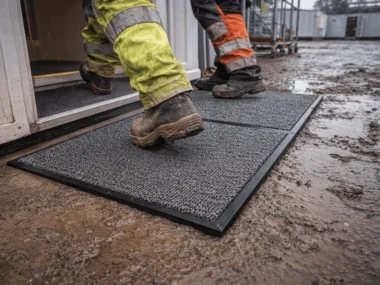
Industrial mats made from textured rubber or high-grip materials help stabilise footing, even in damp or oily conditions. In entrances, production zones, or transition areas, heavy-duty barrier mats with slip-resistant surfaces can significantly reduce incident rates when used correctly.
A commonly used example is a heavy-duty rubber barrier mat from the industrial matting category, designed to provide traction and stability in both indoor and outdoor environments. Businesses looking for reliable, heavy-duty solutions can explore a dedicated range of industrial mats designed for demanding workplace environments.
Creating Defined, Safe Walkways in Busy Environments
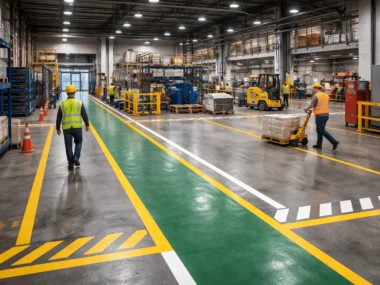
Beyond slip resistance, industrial mats help structure movement within busy facilities. In warehouses and factories, clearly defined walkways reduce confusion and encourage safer foot traffic patterns.
Using contrasting mat colours or clearly edged matting can visually separate pedestrian routes from equipment zones. Temporary walkway mats are also useful during maintenance work or layout changes, allowing businesses to adapt without compromising safety.
Boosting Comfort in High-Footfall Industrial Settings
Safety is only one side of the equation. In many industrial workplaces, employees spend long hours standing or walking on hard surfaces. Over time, this can lead to fatigue, discomfort, and reduced concentration.
The Role of Anti-Fatigue Mats in Worker Wellbeing
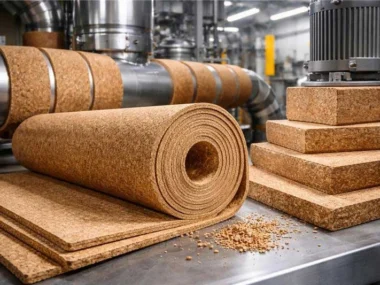
Anti-fatigue mats are designed to provide controlled cushioning that promotes subtle muscle movement. This encourages better circulation and reduces pressure on joints and the lower back. By supporting natural posture and movement, these mats help reduce physical strain during long shifts. Many UK employers now use anti-fatigue matting in packing areas, assembly lines, and workstations to support staff wellbeing and maintain productivity.
Reducing Long-Term Health Strain for Standing Employees
Extended standing on hard floors can contribute to musculoskeletal issues over time. Strategically placing supportive matting in high-use zones helps minimise this impact.
When workers feel more comfortable, they are less likely to experience fatigue-related errors or absenteeism. From an operational perspective, this contributes to both safety and efficiency without requiring major infrastructure changes.
Long-Lasting Floor Protection for Demanding Conditions
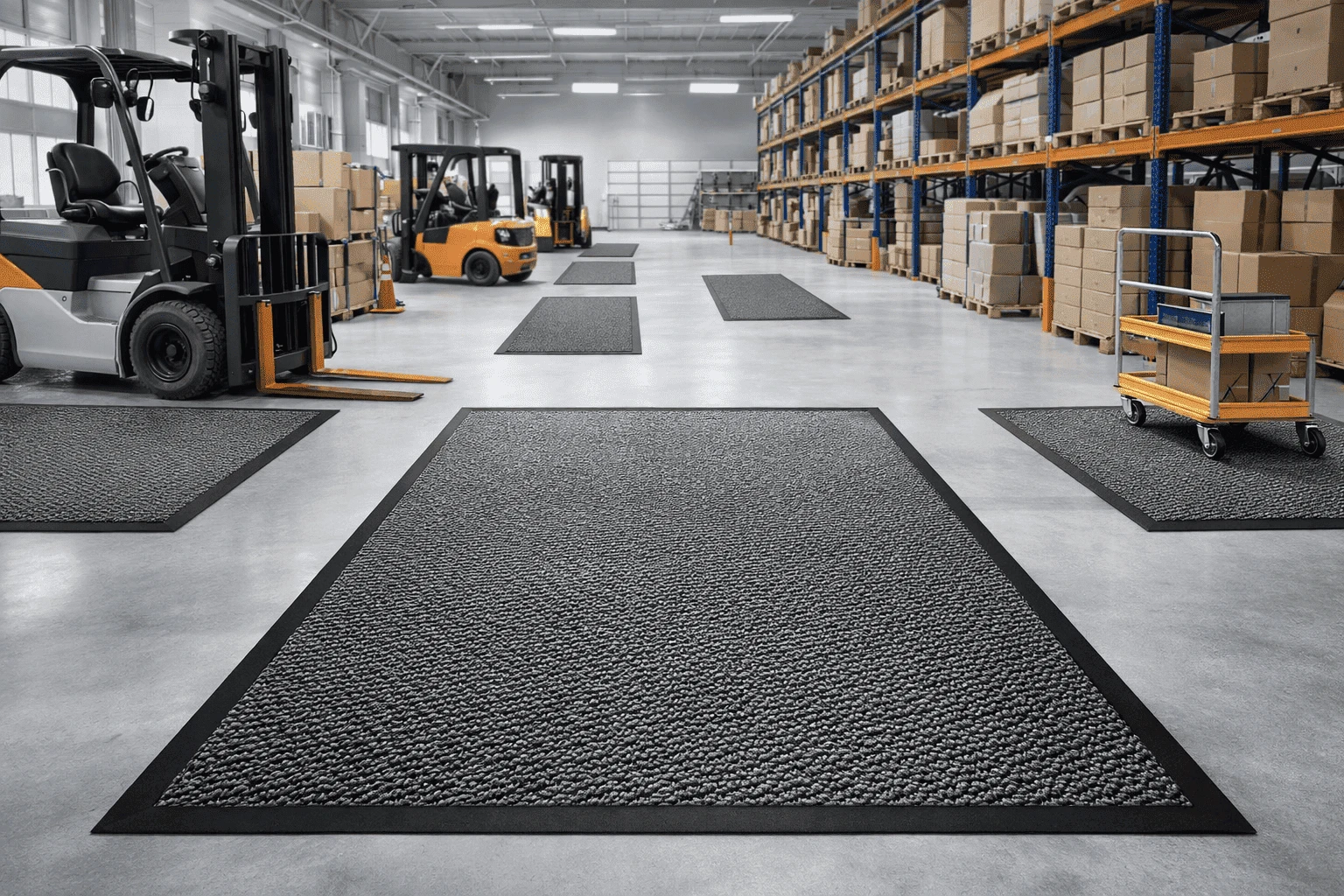
Industrial floors are exposed to constant wear from foot traffic, trolleys, equipment, and environmental debris. Without adequate protection, flooring can degrade quickly, leading to safety concerns and higher maintenance costs.
Choosing Durable Matting That Handles Heavy Use
High-quality industrial mats are manufactured using materials such as PVC, nitrile rubber, or polypropylene. These materials are selected for their resistance to compression, tearing, and surface wear. Heavy-duty mats act as a protective barrier, absorbing impact and reducing abrasion on the floor beneath. This is particularly valuable in loading bays, entrances, and production areas where flooring is under constant pressure.
Maintenance Tips to Keep Mats Functional Over Time
Durability also depends on proper care. Choosing mats that are easy to clean makes regular maintenance more achievable and extends product lifespan.
Key features to look for include:
- Non-shed surfaces to reduce debris build-up
- Anti-curl edges to minimise trip risks
- Washable or hose-down construction
- UV resistance for outdoor use
Routine cleaning such as vacuuming or periodic washing helps mats retain their performance and appearance while continuing to protect floors effectively.
Matching the Right Mat to Your Industrial Setting
No two industrial spaces are identical. The effectiveness of matting depends on selecting the right type for each environment and use case.
Key Factors – Slip Resistance, Thickness, Grip & Washability
When choosing industrial mats, it’s important to assess the specific conditions of each area. Wet or oily zones benefit from drainage and high-grip surfaces, while dry indoor areas may prioritise low-profile designs that accommodate trolleys or carts. Thickness also matters. Thicker mats offer greater comfort for standing tasks, while thinner options are better suited to entrances or areas with limited clearance. Washability is equally important, particularly in environments where hygiene or cleanliness is a priority.
Indoor vs Outdoor Industrial Mat Considerations
Outdoor mats act as the first defence against moisture, grit, and dirt entering a facility. Proper placement reduces internal cleaning demands and helps preserve indoor flooring. Indoor mats complement this by trapping remaining debris and improving comfort in work areas. Using a combination of indoor and outdoor matting ensures consistent protection across the entire site, regardless of weather or traffic levels.
What to Consider When Choosing Industrial Mats (UK Buyer’s Guide)
Selecting industrial mats should be based on function, not just appearance. A considered approach helps businesses address safety, comfort, and durability in a balanced way.
Safety Compliance, Ergonomics, Budget & Size
Key questions to consider include:
- What hazards are present in this area?
- Do staff stand or walk for extended periods?
- Is the space exposed to moisture or debris?
- Will the mat be used indoors, outdoors, or both?
Mats with slip-resistant surfaces, bevelled edges, and ergonomic support features align well with UK workplace expectations. While budget is always a factor, higher-quality matting often delivers better long-term value through reduced accidents and lower replacement costs.
Where to Buy Trusted Industrial Mats in the UK
Working with a UK-based supplier can simplify compliance, delivery, and product suitability. Local suppliers are more likely to understand UK working conditions and provide matting options designed for these environments.
Conclusion: Practical Takeaways for Smarter Matting Decisions
Industrial mats play a quiet but important role in workplace safety, comfort, and floor preservation. When chosen thoughtfully, they help reduce accidents, support employee wellbeing, and protect facilities from unnecessary wear.
By focusing on slip resistance, ergonomic design, durability, and maintenance needs, UK businesses can create safer and more efficient industrial environments. For those researching suitable options or learning more about matting solutions designed for demanding conditions, resources available at therubbermats.uk can provide additional technical insight without compromising on practicality.


 Ben Green