 Ben Green
The building envelope has evolved far beyond its traditional role of protecting occupants from the elements. Today, architects and engineers are designing structures with intelligent exterior systems that respond to changing environmental conditions, improve energy efficiency, and enhance occupant comfort. Known as smart building skins or responsive facades, these advanced systems are redefining how modern buildings interact with their surroundings.
As sustainability becomes a priority across the construction industry, smart building skins are gaining popularity in commercial buildings, airports, hospitals, educational institutions, and high-rise developments. By integrating innovative materials, sensors, and automated technologies, these facades help reduce energy consumption while creating healthier indoor environments.
This guide explains what smart building skins are, how they work, their different types, benefits, applications, and the challenges to consider when incorporating them into modern construction projects.
Quick Facts About Smart Building Skins
| Feature | Details |
|---|---|
| Primary Function | Improve building performance through adaptive exterior systems |
| Common Applications | Commercial buildings, offices, hospitals, airports, educational facilities |
| Main Benefits | Energy efficiency, thermal comfort, natural lighting, sustainability |
| Technologies Used | Automated shading, smart glass, sensors, photovoltaic panels |
| Primary Goal | Optimize building performance while reducing energy use |
| Industry Focus | Architecture, construction, green building, infrastructure |
What Are Smart Building Skins?
A smart building skin is an advanced exterior envelope designed to respond dynamically to environmental conditions such as sunlight, temperature, wind, and humidity. Unlike conventional facades, which remain static, responsive facades adjust their performance to improve energy efficiency and occupant comfort.
These systems may automatically regulate solar heat gain, maximize natural daylight, improve ventilation, or generate renewable energy. Many are connected to building management systems that continuously monitor environmental conditions and adjust facade components in real time.
Smart building skins are becoming an important element of sustainable construction because they help buildings operate more efficiently while reducing dependence on mechanical heating and cooling systems.
How Responsive Facades Work
Responsive facades combine architectural design with advanced engineering and automation.
Sensors installed throughout the building monitor factors such as:
- Outdoor temperature
- Indoor temperature
- Solar radiation
- Wind speed
- Humidity
- Occupancy levels
The information collected is processed by a building management system, which automatically adjusts facade elements to maintain optimal indoor conditions.
Depending on the design, the system may:
- Open or close external shading devices
- Adjust ventilation panels
- Change the transparency of smart glass
- Control movable facade panels
- Optimize daylight penetration
These automated responses help improve building efficiency while reducing energy consumption.
Types of Smart Building Skins
Kinetic Facades
Kinetic facades feature movable panels or shading devices that adjust throughout the day based on sunlight and weather conditions.
These systems reduce solar heat gain during hot periods while allowing more daylight into the building when needed.
Double-Skin Facades
A double-skin facade consists of two layers of exterior glazing separated by a ventilated cavity.
The cavity acts as an insulating barrier that improves thermal performance, reduces outside noise, and enhances natural ventilation.
Double-skin systems are commonly used in office towers and high-performance commercial buildings.
Electrochromic Glass
Electrochromic, or smart glass, changes its tint electronically to control the amount of sunlight entering a building.
During periods of intense sunlight, the glass darkens to reduce glare and heat gain. When natural light is needed, it becomes more transparent without requiring blinds or curtains.
Photovoltaic Facades
Building-integrated photovoltaic panels allow the facade to generate electricity while serving as part of the building envelope.
These systems help offset energy consumption and contribute to net-zero building designs.
Ventilated Facades
Ventilated facade systems create an air cavity between the exterior cladding and the building wall.
This design improves insulation, manages moisture, and reduces heat transfer, making it an effective solution for energy-efficient buildings.
Benefits of Smart Building Skins
Improved Energy Efficiency
One of the greatest advantages of smart building skins is their ability to reduce heating, cooling, and lighting demands.
By controlling heat gain and maximizing natural daylight, these systems lower overall energy consumption.
Enhanced Occupant Comfort
Responsive facades help maintain stable indoor temperatures, reduce glare, and improve natural lighting, creating more comfortable environments for occupants.
Lower Operating Costs
Although installation costs may be higher, reduced energy bills and improved building performance often result in significant long-term savings.
Sustainable Construction
Smart building skins support green building objectives by reducing carbon emissions and improving overall environmental performance.
Many projects pursuing sustainability certifications incorporate responsive facade technologies as part of their design strategy.
Increased Building Value
Buildings equipped with advanced facade systems often appeal to investors and tenants seeking energy-efficient, future-ready properties.
Applications in Modern Construction
Smart building skins are increasingly used across a wide range of construction projects.
Common applications include:
Commercial Office Buildings
Large office buildings benefit from improved daylight control, reduced cooling loads, and enhanced occupant comfort.
Hospitals
Healthcare facilities require consistent indoor environments. Responsive facades help regulate temperatures while improving natural lighting for patients and staff.
Airports
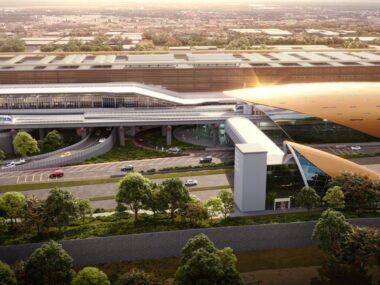
Airport terminals often feature expansive glass facades. Smart building skins reduce glare and improve energy performance in these large public spaces.
Educational Institutions
Universities and schools use adaptive facade systems to improve learning environments while lowering operational costs.
High-Rise Residential Buildings
Modern apartment developments increasingly incorporate smart facade technologies to improve energy efficiency and enhance occupant comfort.
Challenges and Considerations
Despite their many advantages, smart building skins present several challenges.
Higher Initial Investment
Advanced materials, sensors, and automation systems generally increase construction costs compared to conventional facades.
Specialized Design Requirements
Successful implementation requires close collaboration between architects, structural engineers, mechanical engineers, and facade specialists.
Maintenance
Automated systems require regular inspection and maintenance to ensure reliable operation over time.
Climate Suitability
Not every facade system performs equally well in every climate. Designers must select solutions that match local environmental conditions and building requirements.
Future Trends
As construction technology continues to evolve, smart building skins are expected to become even more sophisticated.
Emerging developments include:
- AI-assisted building management systems
- Self-adjusting facade materials
- Advanced environmental sensors
- Energy-generating facade panels
- Adaptive shading technologies
- Integration with smart city infrastructure
These innovations will enable buildings to operate more efficiently while supporting global sustainability goals.
Read Also: Press Brake Buyer’s Guide: How to Choose the Right Machine for Metal Fabrication
Frequently Asked Questions
What is a smart building skin?
A smart building skin is an adaptive exterior system that responds to environmental conditions to improve energy efficiency, occupant comfort, and overall building performance.
Are smart building skins only used on high-rise buildings?
No. They are increasingly being incorporated into commercial offices, hospitals, educational facilities, airports, and residential developments of various sizes.
Do smart facades reduce energy consumption?
Yes. By managing heat gain, daylight, and ventilation, responsive facades can significantly reduce reliance on mechanical heating, cooling, and artificial lighting systems.
What is the difference between a traditional facade and a smart building skin?
A traditional facade remains static, while a smart building skin can adapt to changing environmental conditions through automated or responsive technologies.
Are smart building skins expensive?
They generally have higher upfront costs than conventional facade systems. However, many building owners recover these costs over time through improved energy efficiency and lower operating expenses.
Conclusion
Smart building skins are reshaping the future of architecture by transforming static building envelopes into intelligent systems that actively respond to their environment. Through technologies such as kinetic facades, smart glass, ventilated systems, and photovoltaic panels, these innovative solutions improve energy efficiency, enhance occupant comfort, and contribute to more sustainable buildings.
As the construction industry continues to prioritize environmental performance and operational efficiency, responsive facades are likely to become a standard feature in modern developments. For architects, engineers, developers, and construction professionals, investing in smart building skin technology represents a forward-thinking approach to creating buildings that are more resilient, efficient, and prepared for the demands of the future.


 ENGR. AKIN

 Ben Green