 Ben Green
Digital twins in construction are changing how buildings, infrastructure, and engineering projects are designed, built, monitored, and maintained. Instead of relying only on traditional drawings, schedules, and physical inspections, construction teams can create digital representations of physical assets and connect them with real-world project data.
As construction companies continue adopting smart technologies, digital twins are becoming increasingly important for improving project visibility, detecting problems, optimizing building performance, and supporting better decisions throughout the asset lifecycle.
From commercial buildings and factories to roads, bridges, airports, and utility networks, digital twin technology can provide engineers, contractors, architects, and facility managers with a more detailed understanding of how an asset is performing.
This guide explains what digital twins are, how they work in construction, their benefits, applications, challenges, and their role in the future of smart construction.
Quick Facts About Digital Twins in Construction
| Feature | Details |
|---|---|
| Primary Purpose | Create a digital representation of a physical asset |
| Common Applications | Design, construction monitoring, asset management, maintenance |
| Key Technologies | BIM, sensors, IoT, cloud computing, data analytics |
| Users | Engineers, architects, contractors, project managers, facility managers |
| Assets | Buildings, bridges, roads, factories, airports, utilities |
| Major Benefits | Better monitoring, maintenance, planning, efficiency, and decision-making |
What Is a Digital Twin in Construction?
A digital twin is a digital representation of a physical building, structure, piece of infrastructure, or construction asset.
Unlike a simple 3D model, a digital twin can incorporate real-world information from sensors, equipment, project records, and other data sources. This allows the digital model to reflect changing conditions in the physical asset.
For example, a digital twin of a commercial building could contain information about its structure, mechanical systems, energy consumption, indoor conditions, and equipment performance.
When connected to real-time data, the digital twin can help project teams understand what is happening within the physical asset and identify potential issues.
How Digital Twins Work
Digital twin technology brings together several technologies and data sources.
Building Information Modeling
BIM provides detailed information about building components and systems. It can form an important foundation for creating a digital twin.
Sensors and IoT Devices
Sensors installed on equipment and structures can collect information such as:
- Temperature
- Humidity
- Vibration
- Energy consumption
- Equipment performance
- Structural movement
Cloud Platforms
Cloud-based systems allow project teams to store, process, and access large amounts of project data.
Data Analytics
Analytics tools process information collected from the physical asset and help identify trends, anomalies, and potential problems.
Together, these technologies create a connected digital environment that can represent the current condition of a physical asset.
Digital Twins vs BIM
Digital twins and BIM are closely related, but they are not the same.
BIM primarily focuses on creating and managing digital information about a building or infrastructure project. It is widely used during design and construction.
A digital twin can go further by connecting the digital model to real-world data from sensors, equipment, and operational systems.
In simple terms, BIM can describe what an asset is, while a digital twin can help show how that asset is performing.
The two technologies can therefore work together throughout the construction and operational lifecycle.
How Digital Twins Are Changing Construction
1. Improving Design Coordination
Digital twins can help project teams visualize how different building systems interact before construction begins.
Architectural, structural, mechanical, electrical, and plumbing information can be brought together within a connected digital environment.
This can help identify potential conflicts earlier and reduce expensive changes during construction.
2. Monitoring Construction Progress
Digital twins can provide a central platform for tracking project development.
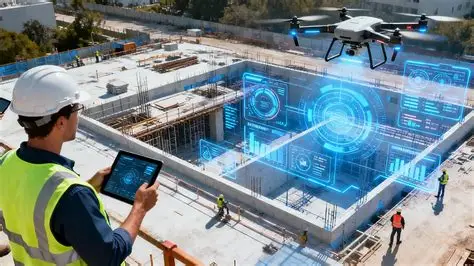
When updated with information from site inspections, drones, sensors, or other technologies, the digital model can provide a clearer picture of actual progress.
Project managers can compare planned work with completed work and identify potential delays.
3. Improving Construction Quality
Digital twins can help teams monitor whether construction activities are progressing according to design requirements.
If physical conditions differ from expected specifications, project teams can investigate the issue before it becomes more difficult or expensive to correct.
This creates an additional layer of quality control throughout the construction process.
4. Supporting Predictive Maintenance
One of the most valuable applications of digital twins begins after construction is complete.
Sensors can continuously monitor equipment and building systems. Changes in temperature, vibration, energy consumption, or performance can indicate that equipment may require attention.
Instead of waiting for equipment to fail, facility managers can use this information to plan maintenance more proactively.
5. Improving Energy Efficiency
Digital twins can monitor building energy performance and identify opportunities for improvement.
Information from heating, ventilation, air conditioning, lighting, and other systems can help facility managers understand where energy is being consumed.
This can support more efficient building operations and contribute to sustainability objectives.
6. Enhancing Infrastructure Management
Digital twins are not limited to buildings.
They can also support the management of:
- Bridges
- Roads
- Railways
- Airports
- Water networks
- Power infrastructure
- Industrial facilities
For large infrastructure projects, having a centralized digital representation can make monitoring and maintenance more efficient.
Benefits of Digital Twins in Construction
Better Decision-Making
Project teams can access more detailed information about assets and use it to support decisions.
Reduced Maintenance Costs
Predictive monitoring can help identify potential equipment problems before they develop into major failures.
Improved Project Visibility
Digital twins can provide a clearer view of construction progress and asset performance.
Increased Efficiency
Connected data can reduce manual information gathering and improve coordination between project teams.
Better Asset Management
Building owners can continue using the digital twin after construction to manage equipment, maintenance, and operational performance.
Improved Sustainability
Monitoring energy and resource consumption can help identify opportunities to reduce waste and improve environmental performance.
Applications of Digital Twins
Digital twin technology has applications throughout the construction lifecycle.
Building Design
Architects and engineers can use connected digital models to evaluate different design approaches.
Construction Management
Contractors can use digital twins to monitor progress, coordinate work, and identify potential problems.
Facility Management
Building operators can use digital twins to monitor systems and plan maintenance.
Infrastructure Monitoring
Infrastructure owners can monitor the condition and performance of roads, bridges, tunnels, and other assets.
Industrial Construction
Factories and processing facilities can use digital twins to understand equipment performance and optimize operations.
Challenges of Digital Twin Technology
Despite its potential, digital twin implementation can present several challenges.
High Initial Costs
Creating a comprehensive digital twin may require investment in sensors, software, data infrastructure, and professional expertise.
Data Integration
Construction projects often use information from multiple systems. Connecting these sources can be technically challenging.
Data Accuracy
A digital twin is only as useful as the information supporting it. Incorrect or outdated data can reduce its reliability.
Cybersecurity
Connected systems can contain sensitive information and must be protected against unauthorized access.
Skills and Training
Construction professionals may need additional training to manage digital twin platforms and interpret the information they provide.
The Future of Digital Twins in Construction
Digital twins are expected to become increasingly connected with other construction technologies.
Future applications could combine digital twins with:
- Artificial intelligence
- Robotics
- Drones
- IoT sensors
- BIM
- Augmented reality
- Predictive analytics
- Automated construction equipment
This convergence could create increasingly intelligent construction and infrastructure management systems
For example, a digital twin could receive information from sensors, identify an abnormal equipment condition, predict potential failure, and alert a maintenance team before the problem affects operations.
Frequently Asked Questions
What is a digital twin in construction?
A digital twin is a digital representation of a physical building, infrastructure asset, or construction project that can incorporate information about its design, condition, and performance.
Is a digital twin the same as BIM?
No. BIM focuses on creating and managing digital information about a building or infrastructure project, while a digital twin can connect that information to real-world operational data.
How do digital twins improve construction projects?
They can improve design coordination, progress monitoring, quality control, maintenance planning, energy management, and project decision-making.
Can digital twins be used for existing buildings?
Yes. Existing buildings can be equipped with sensors and connected systems to create digital twins for monitoring performance, maintenance, and energy consumption.
Are digital twins useful for infrastructure projects?
Yes. Roads, bridges, railways, airports, tunnels, utilities, and other infrastructure assets can benefit from digital twin technology.
Conclusion
Digital twins are becoming an important part of the digital transformation taking place across the construction and infrastructure industries. By connecting digital models with real-world information, they give engineers, contractors, project managers, and facility operators greater visibility into how assets are designed, constructed, and operated.
The technology can improve project coordination, construction monitoring, maintenance planning, energy efficiency, and infrastructure management. However, successful implementation requires accurate data, appropriate technology, cybersecurity measures, and skilled professionals.
As digital twins become more closely integrated with BIM, sensors, drones, robotics, and other smart construction technologies, they are likely to play an increasingly important role in creating safer, more efficient, sustainable, and better-managed buildings and infrastructure projects.

 Ben Green